
Operating System
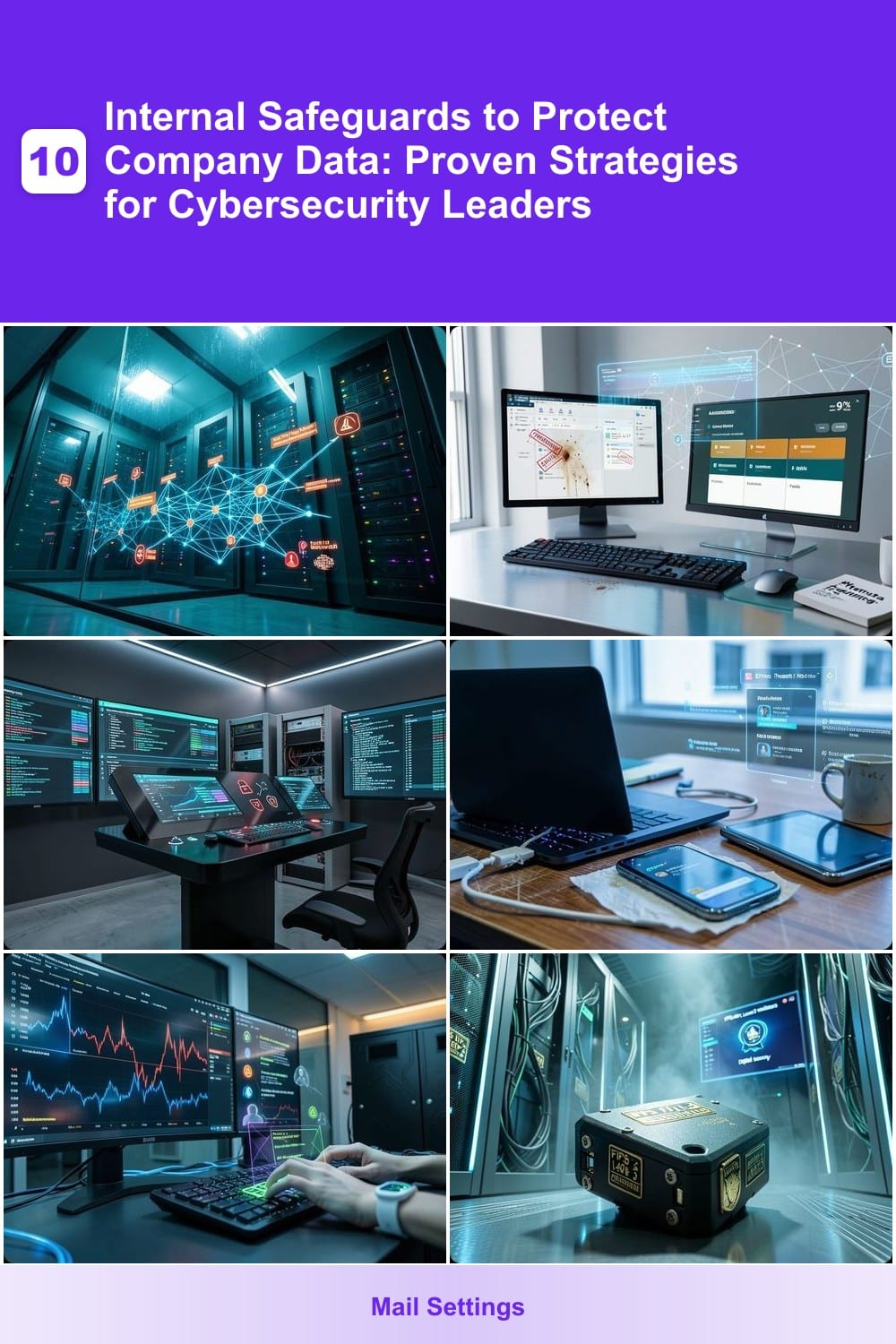
Cyber threats evolve daily, but strong internal safeguards remain your first line of defense. These ten proven strategies help cybersecurity leaders build robust data protection frameworks that adapt to modern risks while maintaining operational efficiency.
Zero Trust Network Access Implementation

Tired of relying on outdated "trust but verify" models that leave your network vulnerable? Zero Trust Network Access (ZTNA) flips the script by demanding verification for every single access request—whether from inside or outside your firewall.
This approach replaces implicit trust with continuous authentication, using multi-factor authentication (MFA), device posture checks, and micro-segmentation to limit lateral movement. Solutions like Cloudflare Access or Zscaler Private Access enforce least-privilege access by default, ensuring users only see what they need—no more over-permissive VPNs or exposed internal resources. For hybrid environments, ZTNA integrates seamlessly with SAML 2.0 and OAuth 2.0, making it a breeze to manage remote teams or third-party vendors.
Perfect for financial services, healthcare, or legal firms where data breaches mean reputational (and legal) disasters. Even small businesses handling customer PII can benefit—imagine a ransomware attack blocked before it ever reaches your servers. 💻
Automated Data Classification Systems

Tired of spending hours manually tagging files as "confidential" or "internal"? Automated data classification systems use AI to instantly analyze and categorize your data based on content, context, and sensitivity—cutting classification time by up to 90% while reducing human errors.
These tools leverage natural language processing (NLP) and machine learning to scan emails, documents, and databases in real-time, applying granular labels like PII (Personally Identifiable Information), financial records, or intellectual property. Solutions like Microsoft Purview, Varonis, and Symantec Data Loss Prevention (DLP) integrate with existing security frameworks, ensuring compliance with GDPR, HIPAA, or CCPA without disrupting workflows. The result? Dynamic access controls that adapt as data sensitivity changes—no more outdated spreadsheets or guesswork.
Perfect for legal firms, healthcare providers, or financial institutions where misclassification could mean fines or breaches, these systems also shine in regulated industries with strict documentation requirements. Start with a pilot in high-risk departments to prove ROI before scaling. ✨
Privileged Access Management Solutions

When 80% of cyber incidents trace back to compromised admin accounts, Privileged Access Management (PAM) isn’t just another security layer—it’s your digital bouncer for high-risk users. Unlike generic access controls, PAM solutions like CyberArk or Thycotic specialize in monitoring, recording, and restricting admin activities with granular permissions, session timeouts, and real-time alerts for suspicious behavior.
These tools go beyond basic authentication by enforcing just-in-time access (granting privileges only when needed) and multi-factor authentication (MFA) for admin logins. For compliance-heavy industries, features like audit trails and role-based access controls (RBAC) simplify reporting for HIPAA, PCI DSS, or GDPR requirements. Many solutions also integrate with SIEM systems to correlate privileged activity with broader security events.
Financial institutions and healthcare providers—where data breaches carry severe legal and reputational costs—benefit most from PAM. If your organization relies on shared admin credentials or lacks visibility into high-risk account activity, this is your first upgrade. 💻
Endpoint Detection and Response Deployment

Your employees’ personal devices—laptops, phones, and tablets—are the most vulnerable entry points for cyberattacks, yet 60% of breaches start here. Endpoint Detection and Response (EDR) solutions like CrowdStrike Falcon or Microsoft Defender for Endpoint provide real-time monitoring, threat hunting, and automated containment to stop attacks before they spread.
These tools go beyond traditional antivirus by using AI-driven behavioral analysis to detect zero-day exploits and lateral movement. Features like live response capabilities let security teams remotely investigate suspicious activity, while automated remediation isolates infected devices in seconds. For remote teams, cloud-based EDR ensures consistent protection whether devices are on-premises or connecting from a café in Denver.
Perfect for organizations with bring-your-own-device (BYOD) policies, EDR transforms endpoints from liability into a proactive security layer. 💻
Insider Threat Detection Programs

Worried about disgruntled employees or careless mistakes becoming your next security nightmare? Insider threat detection programs use machine learning-driven behavioral analytics to spot suspicious activity before it escalates—like unusual data transfers, after-hours access, or sudden policy violations.
These solutions analyze patterns like login frequency, file access anomalies, and privilege misuse in real-time, flagging risks with 90%+ accuracy (per Forrester). Unlike traditional monitoring, they adapt to your organization’s normal behavior, reducing false positives. Tools like Exabeam or Splunk User Behavior Analytics integrate seamlessly with existing SIEM systems.
Ideal for financial firms, healthcare providers, or companies with high turnover, these programs turn insider risks from a ticking time bomb into a manageable threat. 💡
Encrypted Cloud Storage Configuration

When migrating to multi-cloud environments, FIPS 140-2 Level 3 encryption isn’t just a checkbox—it’s your data’s last line of defense. This gold standard for cryptographic modules ensures even government-grade security, making it non-negotiable for industries like healthcare or finance where compliance isn’t optional.
Modern solutions like AWS KMS with FIPS 140-2 validated modules or Azure Information Protection deliver 256-bit AES encryption by default, while tools like HashiCorp Vault add dynamic key management for real-time rotation. The best part? These configurations work seamlessly across AWS, Azure, and GCP, eliminating vendor lock-in while keeping data locked down. Compliance with GDPR’s Article 32 and HIPAA’s Security Rule becomes effortless when your storage layer handles encryption at rest and in transit.
This setup is ideal for regulated industries or any business storing sensitive data in the cloud. The peace of mind alone—knowing your files are protected even if a provider’s infrastructure is compromised—makes it worth the investment. ✨
Security Awareness Training Programs

Your employees might be your biggest security risk—or your strongest defense. Security awareness training programs transform human error from a weakness into a competitive advantage, with phishing simulations that mimic real-world attacks and gamified learning modules that boost engagement by 60%.
These programs deliver 70% fewer security incidents through interactive scenarios (like fake CEO emails) and instant feedback. Tools like KnowBe4 or PhishMe track progress with leaderboards, while microlearning (5-minute modules) fits into busy schedules. The best solutions even integrate with your SIEM systems to correlate training results with actual breach attempts.
Perfect for HR teams, customer service reps, or finance staff—any role handling sensitive data without deep cybersecurity expertise. Start with quarterly phishing tests and watch your click-rate drop from 20% to under 5%. ✨
Third-Party Risk Assessment Framework

When your company relies on third-party SaaS providers or outsourced IT services, their security becomes your responsibility—yet most organizations lack a systematic way to evaluate these risks. A Third-Party Risk Assessment Framework fills this gap by standardizing vendor evaluations, uncovering hidden vulnerabilities before they become supply chain nightmares.
This framework typically includes automated security scorecards (measuring compliance with ISO 27001, SOC 2, or GDPR), contractual risk clauses (like breach notification requirements), and continuous monitoring of vendors’ security posture. Tools like ServiceNow GRC or OneTrust Vendor Risk streamline the process, while frameworks like NIST SP 800-161 provide structured methodologies for assessing everything from cloud providers to managed service partners.
Ideal for financial services, healthcare, or any industry handling regulated data, this safeguard is non-negotiable if you’re using Slack for business communications, AWS for hosting, or third-party payroll systems. Without it, a single compromised vendor could expose your entire ecosystem. 💪
Incident Response Playbooks Development

When seconds count during a breach, incident response playbooks turn chaos into structured action. These predefined procedures—aligned with NIST SP 800-61—cut containment time by 40% by eliminating guesswork and ensuring every team member knows their role instantly.
Think of them as battle-tested checklists for cyber incidents: phishing outbreaks, ransomware attacks, or data exfiltration. Each playbook maps escalation paths, communication protocols, and containment steps tailored to your organization’s tech stack. Tools like Splunk or IBM Resilient integrate with your SIEM to trigger automated responses while your team focuses on strategy.
Perfect for regulated industries (finance, healthcare) or any team handling sensitive data, playbooks ensure compliance while minimizing downtime. The key? Regular drills to keep them sharp—because when a breach hits, you’ll thank yourself for preparing ahead. ✨
Continuous Vulnerability Scanning

Legacy systems and rapid software updates create a perfect storm for vulnerabilities—unless you automate their detection. Continuous vulnerability scanning acts like a 24/7 security guard, using AI-driven penetration testing to find and patch weaknesses before attackers can exploit them.
Tools like Nessus or Qualys scan for CVE databases, misconfigurations, and outdated software in real-time, generating actionable reports with severity rankings. Integration with ticketing systems (e.g., Jira) ensures patches are prioritized and deployed swiftly, reducing exposure windows by up to 70%.
This approach is ideal for organizations with mixed environments—whether maintaining decades-old mainframes or deploying cloud-native apps weekly. It’s the difference between reacting to breaches and preventing them entirely. 💡