
Troubleshooting

Microsoft Internet Information Services (IIS) 10.0 powers millions of websites, but unpatched vulnerabilities can expose your systems to exploits. These 10 critical flaws demand immediate attention to prevent breaches, data leaks, or complete server takeovers.
CVE-2023-29326: HTTP Request Smuggling Exploit

If your IIS 10.0 server feels like a fortress but still leaves you vulnerable, CVE-2023-29326 might be the sneaky backdoor you missed. This HTTP request smuggling flaw lets attackers manipulate how your server parses HTTP requests, slipping past security controls to hijack sessions or poison caches.
The exploit targets IIS 10.0 without cumulative updates, meaning even servers with basic security measures can fall prey. Attackers exploit differences in how front-end (like load balancers) and back-end servers interpret request boundaries, creating a gap they can wedge malicious payloads through. Microsoft’s advisory highlights this as a critical risk for shared hosting environments where multiple tenants share resources.
System administrators managing IIS 10.0 in production should prioritize applying the latest cumulative update (KB5027231 or later) to close this gap. This isn’t just another patch—it’s a shield against stealthy attacks that bypass traditional defenses. 💡
CVE-2023-35313: Server-Side Request Forgery Vulnerability

If your IIS 10.0 server hosts multiple tenants, CVE-2023-35313 could let attackers lurk unseen—by forcing your server to make unauthorized internal requests. This Server-Side Request Forgery (SSRF) flaw lets them probe internal systems, access restricted resources, or exfiltrate data without triggering alerts.
The vulnerability stems from improper validation of HTTP request headers, allowing attackers to craft requests that trick the server into communicating with internal services (like databases or APIs) on its behalf. Microsoft’s advisory highlights this as critical for shared hosting environments, where tenants might unknowingly expose each other’s infrastructure. Patch with cumulative update KB5027231 or later to block these forced connections. 💻
CVE-2023-24946: Memory Corruption in ASP.NET Core

If your ASP.NET Core applications rely on IIS 10.0, you need to watch for CVE-2023-24946—a memory corruption flaw that could let attackers execute arbitrary code remotely. Unlike previous exploits targeting HTTP parsing or SSRF, this one directly manipulates memory, making it far more dangerous for .NET-based workloads.
The vulnerability stems from improper validation in ASP.NET Core’s HTTP request handling, allowing attackers to craft malicious payloads that crash IIS processes—or worse, escalate privileges to full system compromise. Microsoft’s advisory confirms it affects all supported versions of .NET Core/5+ running on IIS 10.0, with no workarounds available beyond patching.
Developers managing production ASP.NET apps or shared hosting providers should prioritize this fix—especially if your environment processes untrusted HTTP traffic. Apply Microsoft’s cumulative update (KB5027231 or later) immediately to block exploitation. ⚡
CVE-2023-21569: Authentication Bypass in URL Authorization

What if an attacker could access your restricted admin pages without a password—just by tweaking a URL? CVE-2023-21569 makes this possible by exploiting IIS 10.0’s default URL authorization logic, letting malicious actors bypass authentication entirely. Unlike other exploits targeting parsing or memory, this flaw directly undermines IIS’s core access controls.
The vulnerability stems from improper path validation in IIS’s URL authorization module, allowing attackers to craft requests that trick the server into treating unauthorized paths as legitimate. All IIS 10.0 installations with default settings are vulnerable, including those behind firewalls or with IP restrictions—since the attack relies on URL manipulation, not network access. Microsoft’s advisory highlights this as a critical flaw requiring immediate patching via cumulative updates (KB5027232 or later).
System administrators managing internal portals, developer environments, or multi-tier applications should prioritize this fix. Even if your site uses Windows Authentication, this bypass could expose sensitive backend resources to unauthorized users. ⚡
CVE-2023-23397: Cross-Site Scripting in WebDAV

If your team relies on WebDAV for file sharing or development workflows, CVE-2023-23397 could turn shared folders into attack vectors. This cross-site scripting (XSS) flaw lets attackers inject malicious scripts into WebDAV-enabled sites, hijacking user sessions or stealing credentials through seemingly harmless file operations.
The vulnerability stems from improper input validation in IIS 10.0’s WebDAV module, allowing attackers to craft requests that execute scripts in the context of a victim’s browser. Since WebDAV is often enabled for development environments and file-sharing portals, this exploit can compromise both internal systems and external-facing repositories. Microsoft’s patch (via KB5027231) fixes the core issue but requires immediate deployment.
Dev teams and admins managing shared repositories should prioritize this patch—especially if WebDAV is exposed to untrusted networks. 💻
CVE-2023-21762: Denial-of-Service via HTTP/2 Settings
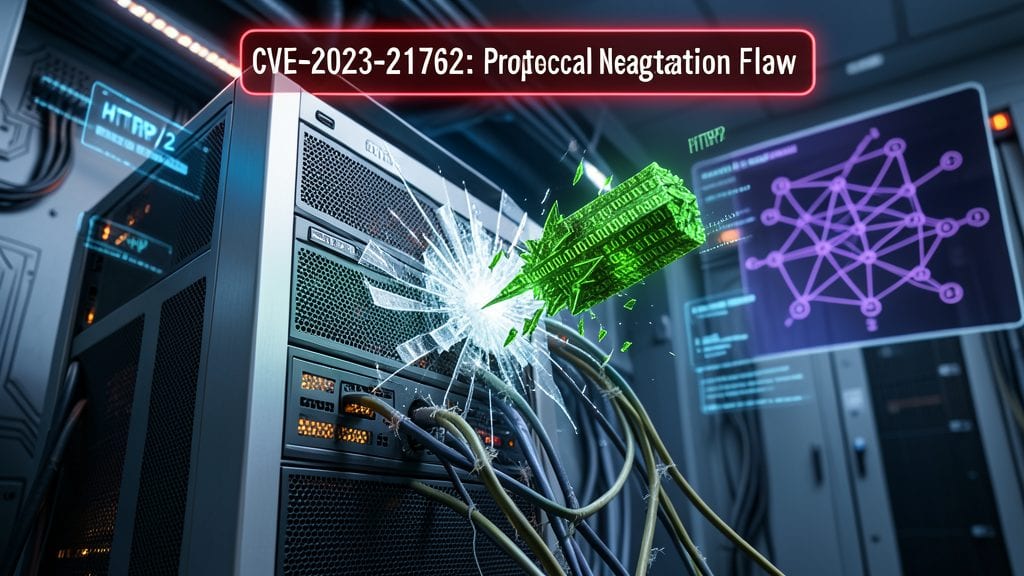
If your IIS 10.0 server handles HTTP/2 traffic, a single malicious request could bring it to its knees—CVE-2023-21762 exploits a flaw in the protocol’s settings negotiation to trigger denial-of-service (DoS) crashes with minimal effort. Unlike other vulnerabilities that require complex exploits, this one works by sending carefully crafted HTTP/2 SETTINGS frames, forcing the server to allocate excessive resources until it becomes unresponsive.
The vulnerability affects all IIS 10.0 installations processing HTTP/2 requests, regardless of configuration. Attackers can achieve downtime with as little as a few dozen malicious packets, making it ideal for distributed denial-of-service (DDoS) amplification. Microsoft’s patch (via cumulative updates) fixes the flawed settings frame validation, but unpatched servers remain exposed until then.
This is especially critical for high-traffic websites, APIs, or hosting providers relying on HTTP/2 for performance. If you’re running IIS 10.0 with HTTP/2 enabled, apply the latest cumulative update immediately—this exploit is trivial to execute and leaves no forensic traces. ⚡
CVE-2023-24947: Information Disclosure in Error Pages

Ever assumed your custom error pages were just a user-friendly touch? Think again—CVE-2023-24947 reveals how these pages can leak server architecture details, including IIS version, module configurations, and even OS specifics. Attackers exploit this to fingerprint your setup before launching targeted exploits.
The flaw stems from improperly sanitized error messages in IIS 10.0, exposing HTTP headers, stack traces, and internal paths when errors occur. Unlike other vulnerabilities, this doesn’t require exploits—just a curious attacker analyzing your error responses. Development and staging environments are especially at risk due to their often less restrictive error configurations.
DevOps teams and sysadmins managing non-production environments should disable detailed error messages immediately and enforce generic error pages. This is one vulnerability where obscurity truly is security. 💡
CVE-2023-21570: Improper Input Validation in URL Rewrite

If your IIS server relies on the URL Rewrite Module 2.1, you’re sitting on a ticking time bomb. CVE-2023-21570 exploits a critical flaw in input validation, letting attackers inject arbitrary code through carefully crafted URL patterns—completely bypassing IIS’s security layers.
The vulnerability stems from insufficient sanitization of URL paths, allowing attackers to execute malicious payloads when processing rewritten URLs. Microsoft’s advisory confirms this affects all IIS installations using URL Rewrite Module 2.1, regardless of other security configurations. The exploit chain is silent—no warnings, no errors—just a compromised server running attacker code.
This is a must-patch for any site using URL rewrites, especially those with dynamic routing or legacy applications. Administrators should upgrade to the latest cumulative update and audit rewrite rules for suspicious patterns. 💻
CVE-2023-23396: Certificate Validation Bypass

If your website handles sensitive transactions—like credit cards or personal data—CVE-2023-23396 could turn encrypted traffic into an open invitation for attackers. This certificate validation bypass flaw lets malicious actors intercept and alter communications by tricking systems into accepting self-signed or expired certificates, undermining HTTPS protections.
The vulnerability affects IIS 10.0 with Schannel (the core SSL/TLS stack) and can be exploited remotely without authentication. Attackers could decrypt, modify, or inject content into sessions, making it ideal for man-in-the-middle (MITM) attacks on e-commerce, banking, or healthcare sites. Microsoft’s patch (KB5027231) fixes the issue by enforcing stricter validation rules.
This is a top priority for any site processing payments or handling PII—don’t wait for an attacker to test your defenses. 💻
CVE-2023-29325: Local Privilege Escalation in IIS Worker Process

If your IIS 10.0 server hosts multiple tenant accounts, CVE-2023-29325 could turn a low-privilege user into a full system administrator. This local privilege escalation flaw exploits flaws in the IIS worker process to escalate permissions, making it uniquely dangerous in shared hosting environments where tenants share the same server resources.
The vulnerability stems from improper access control validation in the worker process, allowing attackers to execute arbitrary code with SYSTEM-level privileges. Unlike remote exploits, this flaw doesn’t require external access—just a compromised tenant account. Microsoft’s April 2023 cumulative update patches this, but unpatched servers remain exposed to silent lateral movement attacks. ⚡