
Software
Ensuring your software works globally requires understanding standardized date and time formats. These seven widely recognized formats prevent errors in applications, databases, and international systems while maintaining compatibility across platforms.
ISO 8601 Date Format YYYY-MM-DD
If you’re building software that needs to work seamlessly across borders, ISO 8601 (YYYY-MM-DD) is the only date format you’ll ever need. Adopted by every major programming language—from Python to JavaScript—and supported natively in databases like PostgreSQL and MongoDB, it eliminates ambiguity by sorting dates chronologically (e.g., "2023-12-25" is always December 25, 2023, never the 25th of December).
This standard also extends to time formats (e.g., HH:MM:SS) and timezone offsets (+00:00), making it ideal for APIs, logs, and global applications. Libraries like moment.js or Python’s datetime module parse it effortlessly, while frameworks like Django and Laravel default to ISO 8601 for serialization. Even Excel and Google Sheets recognize it for data imports.
Perfect for developers working on international APIs, SaaS platforms, or data-driven tools, ISO 8601 ensures zero config headaches when handling dates globally. It’s the future-proof choice for any battle-tested setup. ⚡
US MM/DD/YYYY Date Format

If you’re working with US-specific software—like TurboTax, QuickBooks, or legacy financial systems—you’ll quickly discover that MM/DD/YYYY isn’t just a preference, it’s a necessity. Unlike ISO 8601, this format dominates North American applications where regional compliance and user expectations dictate strict adherence.
The month-first ordering (e.g., 05/15/2024 for May 15) aligns with how US users input dates in forms, calendars, and spreadsheets. It’s the default in Windows systems, Microsoft Excel, and US banking APIs, where parsing errors can trigger critical workflow failures. Libraries like Python’s datetime.strptime() with %m/%d/%Y handle it natively, while JavaScript’s moment.js defaults to this format for US locales.
For developers maintaining legacy systems or building US-market tools, this format is non-negotiable—especially in tax software, payroll platforms, or healthcare EHRs where misaligned dates can cause compliance issues. 💻
European DD-MM-YYYY Date Format
If your software targets the EU market, ignoring the DD-MM-YYYY format could mean compliance violations in critical sectors. Unlike the US format, this structure is legally required for financial transactions, patient records, and government filings across Europe.
Key features include the day-first ordering, which prevents ambiguity (e.g., 01/02/2023 is February 1st in the US but January 2nd in Europe). It’s the default in European banking systems and healthcare databases like those used in the UK’s NHS or Germany’s TEF (Techniker Krankenkasse). Many European programming libraries (e.g., PHP’s DateTime) default to this format unless overridden.
Developers building EU-compliant applications—especially in fintech or healthcare—must hardcode this format to avoid costly errors. Localization tools like i18n.js can help dynamically switch between formats, but EU regulations often mandate DD-MM-YYYY for legal documents. ✨
24-Hour Time Format HH:MM

When precision matters more than convenience, the 24-hour time format (HH:MM) eliminates ambiguity. Used by pilots, shipping companies, and scientists worldwide, this format removes AM/PM confusion by representing time as a continuous 24-hour cycle—14:30 instead of 2:30 PM.
This standard aligns with military time (Zulu time) and UTC-based systems, ensuring clarity in global coordination. It’s the default in most programming languages (e.g., Python’s strftime("%H:%M")) and databases, where time calculations must be exact. Even consumer devices like GPS trackers and flight simulators rely on it for consistency.
Perfect for developers building international logistics tools, scientific instruments, or aviation software, this format ensures no miscommunication when seconds count. ✨
12-Hour AM/PM Time Format HH:MM AM/PM
If your app targets US users, the 12-hour AM/PM format (HH:MM AM/PM) isn’t just a preference—it’s a cultural expectation. From Uber’s ride scheduling to Shopify’s checkout timers, this format dominates consumer-facing interfaces where clarity and familiarity trump global standards.
Unlike the 24-hour format, it includes explicit AM/PM indicators, reducing ambiguity for users accustomed to "9:00 AM" vs. "9:00 PM" distinctions. Most US mobile apps and web platforms default to this format, with automatic localization in frameworks like React Native or Flutter ensuring consistency across devices. For scheduling tools, it’s the default choice because it aligns with how people naturally think about time.
Developers building US-centric consumer apps should prioritize this format for intuitive UX, while global apps can offer it as a locale option. For scheduling APIs, combining it with timezone offsets (e.g., "2:45 PM EST") ensures clarity. 💻
Unix Timestamp Format Epoch Seconds

When your backend needs to track events with millisecond precision—like API calls, database transactions, or server logs—Unix timestamps (epoch seconds) are the invisible backbone. Representing time as seconds since January 1, 1970 (UTC), this format eliminates ambiguity, making it ideal for calculations, sorting, and cross-platform consistency.
Each timestamp is a single integer (e.g., 1712345600 = April 4, 2024), simplifying storage and processing. Libraries like Python’s time.time() or JavaScript’s Date.now() handle conversions automatically, while databases (PostgreSQL, MongoDB) natively support this format for indexing. For time-sensitive operations—like rate limiting or session expiration—it’s the fastest, most reliable choice.
Developers working with microservices, DevOps tools, or analytics pipelines rely on Unix timestamps to ensure consistency across distributed systems. No timezone math, no parsing—just pure, portable numbers. ⚡
RFC 2822 Email Date Format
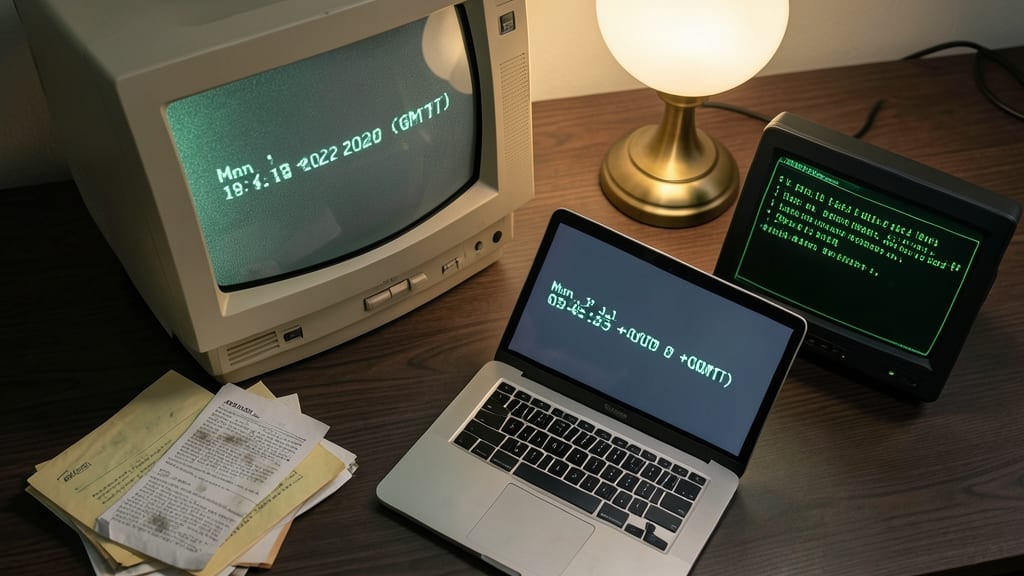
Ever sent an email only to wonder why the date in the header looks like a cryptic puzzle? That’s RFC 2822 in action—a standardized format that ensures every email client and server worldwide interprets timestamps consistently, from Gmail to Outlook to legacy Unix mail systems.
The format follows a day, date, month, year, time, timezone structure like “Wed, 2 May 2023 14:30:00 +0000”, where the timezone offset (+0000) clarifies ambiguity. Unlike human-readable formats, RFC 2822’s strict syntax prevents parsing errors in automated systems, making it the backbone of email protocols like SMTP and IMAP. Libraries like Python’s email.utils or Node.js’s date-fns handle parsing effortlessly.
Developers parsing email headers or building email services will rely on RFC 2822 to avoid timezone mishaps or locale-specific quirks. For anyone working with email APIs or legacy mail systems, this format is non-negotiable. ✨